Retaining Wall Inspections in Burnaby
Know the condition of your wall before it becomes an emergency
A retaining wall inspection is the right first move when you're buying a property with an existing wall, when a wall looks like it might have changed over winter, when a neighbour's tree or construction might have affected your wall, or when you simply want to know the condition of a wall you've had for years without really looking at it closely.
Retaining walls degrade gradually, and the early warning signs are easy to miss if you don't know what to look for. A professional inspection identifies the current condition, flags developing issues before they become failures, and gives you a clear picture of what maintenance or repair might be needed and when.
We assess retaining walls across Burnaby for homeowners, buyers, property managers, and strata councils. Our assessment is practical and direct — you get a clear condition report and a plain-language recommendation, not a vague inspection report full of liability hedges.
What a Retaining Wall Inspection Covers
We look at the wall from both the face side and, where accessible, the top and back side. The assessment covers:
Face condition: cracking patterns, efflorescence (mineral deposits indicating water movement), surface deterioration, missing or damaged block units, joint condition, and overall alignment.
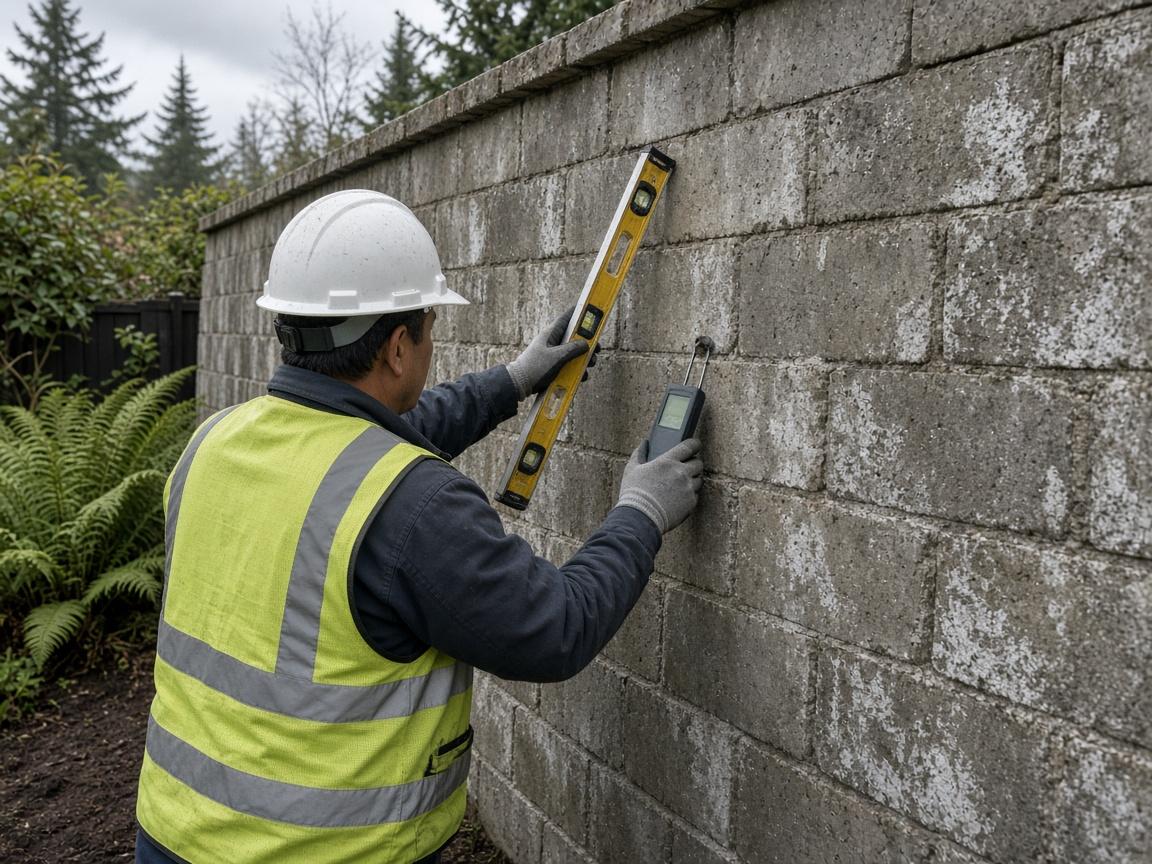
Alignment and movement: using a level and measurement, we check whether the wall is plumb or battered as intended, whether there's been measurable movement from the original line, and whether movement is uniform (often indicating settlement) or localized (indicating drainage failure or footing problems in one area).
Drainage condition: examining weep holes (if present) for blockage, looking for evidence of water staining on the face, checking the drainage outlet if one is visible, and assessing whether surface grading directs water toward or away from the wall.
Foundation area: checking the base of the wall for undermining, erosion, or displacement of the base course.
Top of wall: examining cap stones or cap block condition, checking for cracking or movement at the top of the wall, and observing the area immediately behind the top of the wall for drainage concerns.
Vegetation: noting any trees or large shrubs with roots that are approaching or potentially growing behind the wall.
We photograph the wall during the inspection and reference the photos in the report.
What the Inspection Report Tells You
The inspection report is a straightforward document: current condition, identified deficiencies, recommended actions, and rough priority and timeline for each.
We rate condition on a simple scale: Good (no significant concerns, regular monitoring adequate), Fair (developing issues that should be addressed within 1–3 years), Poor (deteriorating condition requiring prompt attention), and Urgent (imminent failure risk, action needed immediately).
For each deficiency we identify, we explain what caused it, what will happen if it isn't addressed, and what remediation involves. We're not trying to sell you the most expensive repair — we're trying to give you an accurate picture of your wall.
At the end of the report, we give a summary recommendation: monitor only, plan for repair, repair soon, or emergency. This is the information you actually need to make decisions.
When to Get a Retaining Wall Inspection
Before buying property with a retaining wall: retaining wall replacement can run $15,000–$50,000+ for a significant wall. Know what you're getting into before the purchase.
After a significant seismic event or major storm: if the wall hasn't moved, great. If it has, catching it early makes repair much simpler.
If you notice changes: cracks that have appeared or grown, a section that looks different than it used to, drainage behaviour that has changed. Get it looked at before the next rainy season.
Every 5–10 years as preventive maintenance: retaining walls don't maintain themselves, and a condition check every several years catches developing problems while they're still inexpensive to fix.
If you're planning construction or landscaping near the wall: adding a retaining wall above an existing wall, planting large trees near the wall, or adding a driveway behind the wall all affect the wall's loading. Understand the current condition before adding load.
Frequently Asked Questions
How much does a retaining wall inspection cost in Burnaby?
Our on-site assessments are provided free of charge when you're considering having us do the remediation work. For standalone inspection reports (for property purchase due diligence or strata records, for example), contact us for pricing.
Can you tell me if a wall is safe just from photos?
We can give you a preliminary opinion from photos, but we can't assess movement, drainage condition, or footing integrity without being on site. Photos are useful for pre-screening whether an in-person visit is warranted.
Do retaining walls need to be inspected by an engineer?
For most residential retaining walls, a contractor assessment is adequate to understand condition and maintenance needs. Walls adjacent to buildings, walls supporting significant structures, or walls that are significantly taller may warrant an engineer's review as well, particularly if structural failure could have serious consequences.
Want a professional assessment of your retaining wall? We inspect walls across Burnaby — call to schedule.
Burnaby Retaining Wall Experts — serving Burnaby and the Lower Mainland.
Get a Free Quote
- Licensed & Insured
- BC Certified Contractors
- Local Burnaby Team
- Free On-Site Quotes